
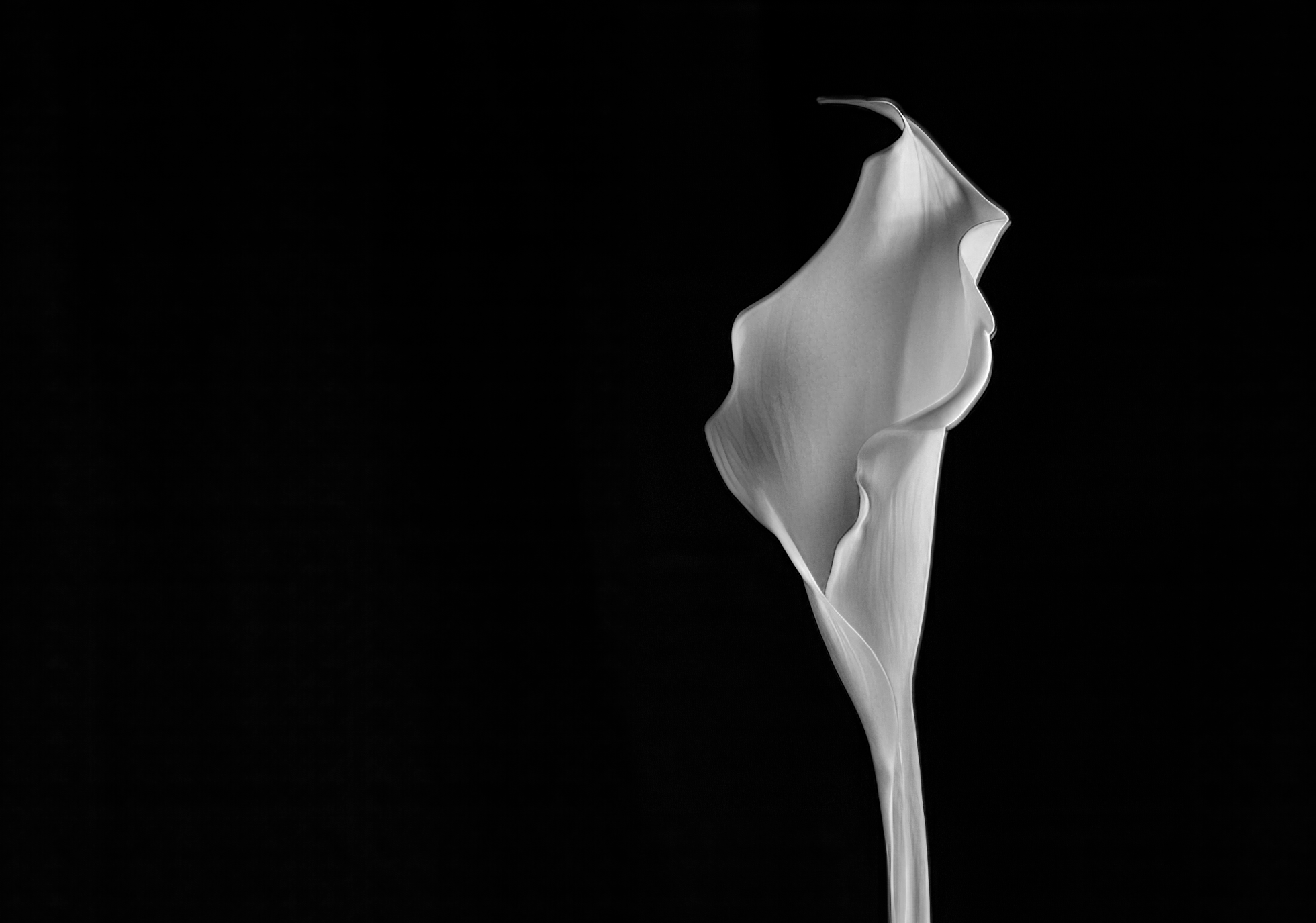
Our Mono Magicians Monthly Challenge for January 2026 is MINIMALISM
Stripped of colour, the image relies on light and shadow, line, and form. Distractions fall away, leaving a small number of visual elements—often just one—that carry the emotional and visual weight of the photograph. A single flower in a scene, a lone figure in an empty street, or a stark architectural edge cutting through light can be enough.
Negative space plays a central role. Large areas of white, grey, or deep black create breathing room, guiding the eye and amplifying the subject’s presence. This space is not emptiness; it is an active compositional tool that adds calm, tension, or isolation.Contrast is used deliberately, not aggressively. Subtle tonal transitions can be just as powerful as bold blacks and whites. Texture, when present, is simple and restrained—suggested rather than shouted.
At its heart, monochrome minimalism is about intentional seeing. It asks the photographer to slow down, simplify, and decide what truly matters in the frame. The result is often contemplative, elegant, and quietly expressive—images that invite the viewer to pause rather than consume.
This video on Minimalism by Judy Hancock Holland has some fabulous examples of minimalism in photography and she explains the concept extremely well.