Juxtaposition: The Power of Contrast in Photography
Juxtaposition!
We’ve heard it so many times, from judges, from peers, it sounds impressive,
but what does it actually mean?
If, like me, you didn’t really ‘get it’ , I hope this helps.
AND…. GUESS what our next month’s Mono Challenge theme is going to be !
Juxtaposition is one of the most powerful creative tools available to photographers. At its simplest, it means placing two elements side by side so that their differences — or similarities — become more striking. But in practice, it does something deeper: it creates meaning.
Photography is already an act of selection. When we choose what to include in the frame, we are deciding what conversations will happen inside that rectangle. Juxtaposition is about making those conversations intentional.

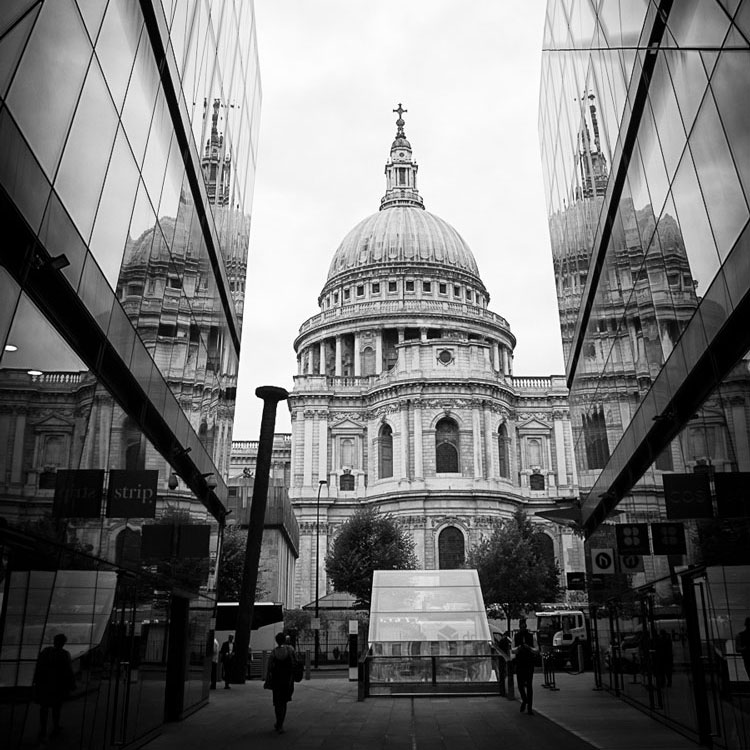
Think of an ancient, historic building standing beside a sleek glass office block. A solitary figure dwarfed by monumental architecture. Delicate flowers pushing through cracked concrete, a block of ice on a beach, a boat where it shouldn’t be! Each pairing tells a story — about time, resilience, progress, fragility or tension. The viewer doesn’t just see two objects; they feel the relationship between them.


In monochrome photography, juxtaposition becomes even more powerful. Without colour to guide the eye, contrast in tone, texture and shape takes centre stage. Soft light against deep shadow. Smooth skin against weathered hands. Stillness beside motion blur. These visual opposites create tension — and tension holds attention.
Juxtaposition is not about forcing contrast into every image. It is about awareness. It is about slowing down and asking: what happens if I move slightly to the left? What enters the frame? What dialogue begins?

For those working on projects, consider building a series around a single opposing theme — old and new, strength and vulnerability, silence and noise, light and shadow, movement and stillness, order and chaos, growth and decay, crowds and solitude, Let the contrasts evolve across images.
Also, some of these translate beautifully into monochrome work:
Emotional contrasts — calm expression in a chaotic environment
Texture contrasts — smooth metal against weathered wood
Scale contrasts — tiny human figure against vast landscape
Temporal contrasts — abandoned space beside modern life
Because often, the most compelling photographs are not about what stands alone — but about what stands beside something else!
All images: Shirley Difrawy